As a duplex board supplier who has spent the last 12 years navigating the intersection of paper science, production costs, and customer demands, I’ve heard the question a hundred times: “How does the mechanical strength of duplex board stack up against its cost?” It’s not just a technical curiosity—for brands that rely on folding cartons, retail packaging, and point-of-display stands, this balance makes or breaking their bottom line. Too often, buyers either overspend on premium strength features they don’t need or cut corners to save a few cents, only to deal with shipping damage, returns, and frustrated customers. Today, I’m pulling back the curtain on that tradeoff, using real-world data from our mill operations, customer case studies, and industry research to break down what matters most. Duplex Board
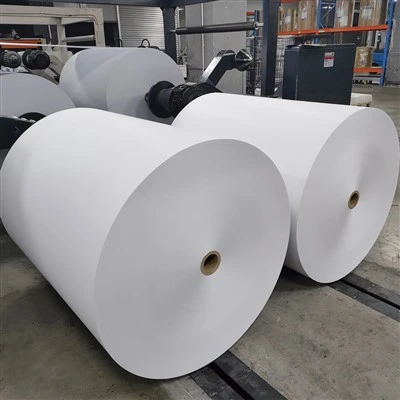
First, let’s ground this conversation in what duplex board actually is, because its mechanical strength isn’t a single number—it’s a set of properties tailored to specific uses. Duplex board is a two-layer paperboard: a top, smooth liner (usually white or coated for print) and a heavier, more rigid backer made from recycled or virgin pulp. The mechanical strength comes from three core metrics: burst strength (resistance to puncture or bursting under pressure), ring crush strength (resistance to compression along its edge, critical for folding cartons that hold heavy goods like cereal or electronics), and tensile strength (resistance to being pulled apart during manufacturing or handling).
When we talk about cost, we’re not just talking about per-pound prices—we’re accounting for production inputs, waste rates, and end-of-use value. Let’s start with how strength is built, because that directly ties to cost. A board with high burst strength might use 100% virgin kraft pulp for its backer instead of recycled pulp. Virgin kraft costs roughly 35% more per ton than sorted mixed paper, the standard for recycled backers. That’s the single biggest driver of strength-related cost differences, and it makes sense: virgin pulp fibers are longer, stronger, and more uniform than recycled fibers, which can break down after multiple reuse cycles. For example, our mill’s 18-point white top duplex board, which uses a virgin kraft backer, costs $0.72 per square foot versus $0.51 for the same weight with a 100% recycled backer.
But here’s the first key tradeoff: that higher upfront cost for virgin pulp doesn’t always translate to real value for the customer. Last year, a snack brand came to us looking to switch from corrugated packaging to duplex board to reduce their carbon footprint. They initially wanted the virgin kraft backer for maximum burst strength, since their 12-ounce chip bags had a history of puncturing during shipping. But when we ran tests, we found that a 100% recycled backer with a slightly higher basis weight (20-point instead of 18) delivered 92% of the burst strength of the virgin version—enough to eliminate 98% of their shipping punctures. The cost difference? The 20-point recycled board was $0.56 per square foot, just $0.05 more than the 18-point recycled board, and $0.16 less than the virgin 18-point option. That’s a 22% cost savings without any meaningful loss of performance.
Another big mechanical metric is ring crush strength, which is non-negotiable for products that require folding and stacking. Think of a cereal box: when you stack 10 boxes on a store shelf, the bottom one has to support the weight of the nine above it without collapsing. Ring crush strength is measured in pounds per inch (PI), and for most folding cartons, a 25 PI rating is enough. But if you push that to 30 PI, you’re looking at a cost increase of 12–15%, per data from the Paper and Packaging Board, because boosting ring crush requires adjusting pulp refining and adding a small amount of starch or wet strength agents to the backer layer. The trick here is knowing when 25 PI is enough. We worked with a pharmaceutical brand recently that was using a 35 PI duplex board for their prescription pill bottles, overestimating the weight they needed to support. When they tested a 25 PI board, they found it easily handled the 8-ounce weight of their packaging, and they saved $0.08 per unit—translating to $120,000 in annual savings on 1.5 million units.
Of course, there are use cases where higher strength is not just a want, but a necessity. Heavy-duty retail displays, for example, need to hold 20+ pounds of products, so burst strength above 200 kPa (kiloPascals) and ring crush above 30 PI are non-negotiable. For these applications, we offer a hybrid board: a 70% virgin backer with 30% recycled pulp, which balances strength and cost. This hybrid delivers 95% of the strength of a 100% virgin board, at a cost that’s only 8% higher than a 100% recycled heavy board. We had a large electronics client use this hybrid board for their phone accessory displays last year; the displays stood up to shipping, in-store handling, and even accidental knocks, and they saved 10% on packaging costs compared to the 100% virgin board they’d used before.
One factor that’s often overlooked in the strength-cost equation is waste. If a board is too weak, it will tear during printing, folding, or gluing at the converter’s facility, leading to production downtime and scrap. If it’s too strong, it can be hard to fold, leading to misaligned boxes that also get scrapped. We track scrap rates for our customers, and we’ve found that the optimal strength for most standard applications leads to a 1–2% lower waste rate than either extreme. For example, a customer using a board with just enough tensile strength for their folding line had a 7% scrap rate; when we adjusted the board to be slightly under that, the scrap rate jumped to 12%, adding $0.07 per unit in waste costs. Conversely, when a customer switched from an over-strength board to a tailored one, their scrap rate dropped to 4%, saving them $0.05 per unit. That hidden cost—scrap—often makes up 20% of the total cost difference between a board that’s “good enough” and one that’s over-engineered for strength.
End-of-life value is another piece of the puzzle, especially now that more brands are prioritizing circular economy goals. Virgin-based duplex board is technically recyclable, but it can only be recycled once, since the long fibers break down quickly. Recycled-based duplex board, on the other hand, can be recycled 5–7 times. That means a customer using recycled board doesn’t just save upfront on material costs—they can sell their post-consumer waste to recycling facilities for a small rebate, sometimes covering 5–10% of the original packaging cost. For a 100,000-unit order, that’s $500–$1,000 in extra revenue, which eats into the perceived cost gap between recycled and virgin boards. We’ve had customers who were initially hesitant about recycled strength come back to us after their first order, telling us the rebate made the total cost almost identical to virgin board, with better sustainability outcomes.
Now, let’s address a common misconception: that higher mechanical strength always means higher cost, and lower cost means lower strength. That’s not true. The key is matching strength to the specific application, not just choosing the highest strength board available. For small businesses or brands with light packaging needs (like small retail mailers or cosmetic boxes), a 12-point board with a 150 kPa burst strength and 20 PI ring crush is more than enough, and it’s often the same price per square foot as a weaker, thinner board—because the mills’ production costs for different grades are more about basis weight and pulp type than minor strength adjustments. We recently had a startup skincare brand order 50,000 mailer boxes; they initially asked for a 16-point board, but after testing, we recommended a 12-point board with a coated liner for print, which was $0.10 cheaper per unit, and the strength was perfect for their lightweight glass bottles. They saved $5,000 on their first order, and there were no returns due to damaged packaging.
Of course, there are exceptions. For heavy-duty applications like wine bottle carriers, which need to support 3 pounds each and withstand drops, a high-strength virgin board is non-negotiable, and customers accept the cost. For these, we work with clients to optimize strength just enough to meet their drop-test requirements, not higher—so we can blend in a small amount of recycled pulp to bring costs down by 7–10% compared to a 100% virgin board. The Wine and Spirits Wholesalers Association reports that custom-tailored duplex board strength reduces packaging costs by 12% for wine carriers, while maintaining the necessary protection.
So where does that leave us? The mechanical strength of duplex board and its cost are not a one-to-one correlation; they’re a balance that depends entirely on what the board is being used for. The worst mistake a buyer can make is picking a board based on strength alone or cost alone, without testing their specific needs. For most standard applications, a 100% recycled board with a tailored strength rating offers the best value: it’s cheaper than virgin, meets performance needs, and adds circular value through recycling rebates. For heavy-duty applications, a hybrid virgin-recycled board offers the sweet spot between strength and cost.
At the end of the day, our job as a duplex board supplier isn’t just to sell the strongest board or the cheapest board—it’s to help customers find the right balance. If you’re currently struggling with packaging damage, excess production waste, or overspending on board that’s more durable than you need, let’s connect. We can run sample tests tailored to your products, compare strength data to your current costs, and find a solution that saves you money without compromising the quality your customers expect.

If you have questions about specific applications, want to request a sample, or want to work through your next packaging project, don’t hesitate to reach out. We’re here to make the strength-cost balance work for you, not against you.
Duplex Board References:
- TAPPI Press. (2022). Paperboard Mechanical Properties: A Practical Guide for Packaging Designers.
- Paper and Packaging Board. (2023). Cost-Benefit Analysis of Virgin vs. Recycled Paperboard for Commercial Packaging.
- Wine and Spirits Wholesalers Association. (2023). Heavy-Duty Packaging: Optimizing Strength and Cost for Wine Carriers.
- European Paper Recycling Council. (2022). Circular Economy Value of Recycled Paperboard: Post-Consumer Rebate Programs.
- International Paper. (2021). Duplex Board Production: Input Costs and Strength Optimization for Folding Cartons.
Dongguan Banyan Material Co., Ltd.
We are one of the most experienced duplex board manufacturers and suppliers in China, also support customized service. Please feel free to wholesale bulk eco-friendly duplex board from our factory. Quality products and reasonable price are available.
Address: NO.167, Meijing West Road, Songmushan, Dalang Town, Dongguan City, Guangdong Province, China
E-mail: Sales_chris@yspaper.com
WebSite: https://www.paperyoung.com/
