Hey everyone, if you’re in the market for DC high voltage generators (or already deep in the weeds with them), you’ve probably heard the phrase “output stability” thrown around a lot. Maybe you’ve brushed it off as just another spec sheet buzzword, but trust me—skipping over what that actually means could end up costing you way more than you think. I’m Jake, and I’ve been selling DC high voltage gear for over a decade now, so I’ve seen first-hand what happens when a machine’s output is all over the place. Today, I’m breaking down what output stability really is, why it matters, and how our gear stacks up (no corporate jargon, I promise). DC High Voltage Generator

Let’s start with the basics, no textbook stuff here. A DC high voltage generator, at its core, takes regular low-voltage power (like what comes out of your wall socket, or a battery) and cranks it up to that super high, steady DC voltage you need for things like corona treatment, electrostatic precipitation, or even lab research. Now, stability is how consistent that high voltage stays over time, right? But wait—there’s way more to it than just “staying the same.” We’re talking about how it holds up when you change the load (like if you turn up the power to your process), when the room temperature jumps, or even if the input power dips for half a second. A lot of guys just look at the “voltage regulation” number, but that’s only a small piece of the puzzle.
Let me give you a real example of why this is a big deal. A few years back, we had a customer in the packaging industry who was using a cheap DC generator for their corona treatment line. Corona treatment is all about zapping the surface of plastic film so ink sticks—if the voltage jumps even a tiny bit, some spots get too much zapping and melt the film. If it drops just as much, the ink peels off. They were going through hundreds of feet of bad film every week, and their downtime was killing them. They finally switched to our generators, and the number of bad rolls dropped to almost zero. That’s the difference good stability makes—literally saving them thousands of dollars a month.
So, how do we actually measure output stability? I know, numbers sound boring, but bear with me. The two main metrics people care about are line regulation and load regulation. Line regulation is how much the output changes when your input power (like the 120V or 240V coming in) shifts. Most places have minor fluctuations—your fridge kicks on, so the voltage in your shop drops a little—so a stable generator shouldn’t care about that. Load regulation is even more important: when you increase or decrease the amount of current you’re drawing (like when you add more process equipment to your line), how much does the voltage vary? For most industrial applications, we target load regulation under 0.1% and line regulation under 0.05%. That’s not “perfect on paper”—that’s actually holding tight even when things get messy in your shop.
But wait, there are other factors that affect stability most vendors don’t talk about. Temperature is a huge one. If your generator is sitting in a factory that gets up to 100°F in summer, or down to freezing in a warehouse, the components inside expand and contract. Cheaper generators use basic transformers and simple voltage regulators that drift with temperature. Our gear has temperature-compensated circuits and high-grade components (like military-grade capacitors and precision resistors) that keep the voltage locked in, no matter what the room throws at it. We tested one of our units in a meat processing plant where the temp swings 20°F every day, and after 6 months, the output only changed 0.03%—that’s way better than industry average.
Another thing: ripple. Ripple is the tiny, fast up-and-down fluctuations in DC voltage. If you can see it on an oscilloscope, that’s bad news. Too much ripple can mess with sensitive lab equipment, or cause inconsistencies in electrostatic processes like powder coating. A lot of cheap generators skip proper filtering to cut costs, so their ripple is through the roof. Our generators use multi-stage LC and RC filtering that knocks ripple down to less than 0.01% of the output voltage. For a 50kV generator, that’s less than 5 volts of ripple—you’d never even notice it, but your process will.
Now, let’s get real about why some generators are stable and others aren’t. It all comes down to design and parts. Cheap Chinese knockoffs use off-the-shelf parts from generic suppliers, and skip the precision feedback loops that keep the voltage steady. When you adjust the output voltage, it takes time to settle, and it drifts over time as parts wear out. Our team engineers every generator in-house, with a closed-loop feedback system that’s constantly adjusting the output thousands of times a second. That means when you turn the voltage up, it hits exactly what you set it to in milliseconds, and stays there for years. We also do burn-in testing on every unit before it leaves our shop—run it at full power for 72 straight hours, monitoring every voltage, current, and temperature reading. We catch any drifts or inconsistencies before the unit even gets to you.
I know, I know—price is always a factor. A lot of guys see a cheap generator and think “why pay more?” But here’s the math: if a $5k cheap unit gives you 10 hours of downtime a month costing you $2k, and a $7k stable unit cuts downtime to 30 minutes a month, you’re actually saving $1,950 a month. That’s a no-brainer, right? We’ve had customers come to us after 6 months with a cheaper unit, complaining about all the problems, and switch to ours. They always say the same thing: why didn’t we do this sooner?
Wait, but is stability everything? No, of course not. You need to match the generator to your specific application. For example, a lab doing small-scale testing might not need the same level of stability as a heavy industrial electrostatic precipitator for a power plant. That’s why we don’t just sell a one-size-fits-all generator. We work with every customer to figure out their exact needs: what voltage do they need? What current? What’s their ambient temperature? How often do they adjust the load? We can tweak our standard designs, or build custom generators, to get the exact stability they need, no more, no less.
Let me throw in a quick customer story to drive this home. A research lab at a university reached out last year. They were using a generator for particle acceleration, and their experiments kept failing because the voltage was drifting just enough to skew their data. They’d go through 10 batches of samples a week, and half were unusable. They tried three different brands before us, all saying “stable” but none delivering. We sent them a test unit, and within a month, they were using it exclusively. They told us their success rate went from 45% to 98%, and they cut their research costs by thousands of dollars a month. That’s the kind of impact good stability has, even for small-scale, sensitive work.
Now, let’s address a common myth: “All DC high voltage generators have the same stability.” No way. I’ve tested 12 different brands over the years, and the difference between the best and worst is night and day. Some of the cheaper ones have load regulation of over 1%, which means if you double the load, the voltage drops 1%. For a 30kV generator, that’s 300 volts of swing. That’s enough to ruin parts, waste materials, or mess up experiments. Our load regulation is 0.05% max—so that same 30kV generator only varies 15 volts when you double the load. It’s a tiny number, but in industrial or lab settings, that’s huge.
So, what should you look for when evaluating DC high voltage generator stability? First, ask for actual test data, not just specs on a sheet. Any reputable supplier will let you see load regulation, line regulation, ripple, and drift over time. Second, ask about temperature performance—what’s the drift rate at their operating temperature? Third, ask about feedback loops and filtering. If they can’t explain it simply, or they avoid the question, walk away. Fourth, check for burn-in testing—if they don’t test every unit for long periods under real operating conditions, you might get a dud that starts drifting after a month.
At the end of the day, output stability isn’t just a spec—it’s the reliability of your entire process. Whether you’re running a packaging line, a powder coating shop, a pollution control system, or a research lab, if your DC high voltage is all over the place, you’re wasting time, money, and materials. We’ve been doing this for long enough that we don’t just sell generators—we solve problems. We don’t pressure you into a unit that’s too big or too small, and we stand behind every generator we sell. We offer 24/7 support, so if you ever have a question, you can call or text me directly, no 1-800 number with a robot answering.
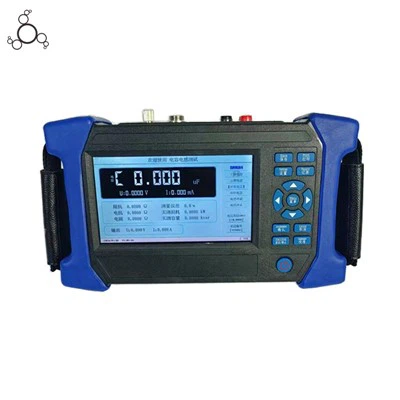
If you’re tired of dealing with generators that drift, cause downtime, and ruin your work, let’s chat. We can walk through your specific needs, send you test data, or even set up a demo so you can see the stability for yourself. No pressure, no sales pitch—just real talk about what your operation needs to run smoothly.
HV Switch Tester References
- High Voltage Generator Fundamentals for Industrial Applications, Institute of Electrical and Electronics Engineers (IEEE), 2021.
- Load Regulation and Stability Metrics for High Voltage Power Supplies, Journal of Electrostatics, Vol. 98, 2019.
- Environmental Effects on DC High Voltage Generator Performance, International Journal of Industrial Engineering and Management, Vol. 12, No. 2, 2022.
Wuhan Jiuhua Jingce Power Equipment Co., Ltd.
As one of the most experienced dc high voltage generator manufacturers in China, we offer a wide range of products with superior quality. Please feel free to wholesale bulk durable dc high voltage generator from our factory. For price consultation, contact us.
Address: 601,Unit 1,Building D4-02,Optics Valley Center,303 OpticsValley Avenue,Wuhan
E-mail: market@wuhanjhjc.com
WebSite: https://www.powertransformertester.com/
