Hey there! I’m working for an optical fiber supplier, and today I wanna chat about how to manage chromatic dispersion in optical fiber. It’s a super important topic in the world of optical communication, so let’s dig in! Optical Fiber
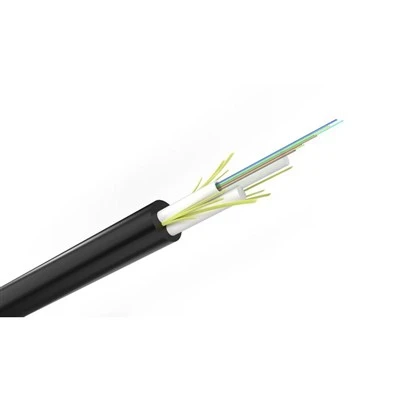
First off, what the heck is chromatic dispersion? Well, in simple terms, it’s the spreading out of light pulses as they travel through an optical fiber. You see, light isn’t just one single color; it’s made up of a bunch of different wavelengths. And different wavelengths travel at different speeds in the fiber. This difference in speed causes the light pulses to spread over time, which can mess up the signal quality and limit the transmission distance and data rate.
So, why do we need to manage it? In modern optical communication systems, we’re always trying to send more data over longer distances at higher speeds. Chromatic dispersion can be a real pain in the butt because it can lead to inter – symbol interference (ISI). ISI means that the symbols (bits of data) in the signal start to overlap, making it hard for the receiver to tell them apart. This can result in errors in data transmission and a decrease in the overall performance of the system.
Now, let’s talk about some ways to manage chromatic dispersion.
1. Using Dispersion – Shifted Fibers
One of the most straightforward ways is to use dispersion – shifted fibers (DSF). These fibers are designed in such a way that the zero – dispersion wavelength is shifted from the standard 1310 nm to around 1550 nm. Why 1550 nm? Well, this is the wavelength where the fiber has the lowest attenuation (loss of signal strength). By shifting the zero – dispersion wavelength to 1550 nm, we can reduce chromatic dispersion at the wavelength where the fiber is most efficient.
For example, in a long – haul optical communication system that operates at 1550 nm, using a dispersion – shifted fiber can significantly improve the signal quality. The light pulses can travel much farther without spreading too much, allowing for higher data rates and longer transmission distances.
2. Dispersion – Compensating Fibers
Another option is to use dispersion – compensating fibers (DCF). These fibers have a high negative dispersion value. You can think of them as a "cure" for the positive dispersion in the regular transmission fiber. When you insert a length of DCF into the optical link, it can counteract the dispersion that the light pulses have experienced in the transmission fiber.
Let’s say you have a long – distance optical link using standard single – mode fiber. As the light pulses travel through this fiber, they start to spread due to chromatic dispersion. By adding a section of DCF at appropriate intervals along the link, you can squeeze the spread – out pulses back together. This helps to maintain the signal quality and allows for reliable data transmission.
3. Optical Phase Conjugation
Optical phase conjugation (OPC) is a more advanced technique. It involves generating a phase – conjugated replica of the optical signal. This replica has the opposite dispersion characteristics of the original signal. When the phase – conjugated signal is combined with the original signal after it has traveled through the dispersive fiber, the dispersion effects can be canceled out.
It’s like having a mirror image of the dispersion problem. When you bring the two together, they sort of "undo" each other’s dispersion. This technique is really useful in high – speed, long – haul optical communication systems where other dispersion – management methods might not be enough.
4. Adaptive Equalization
Adaptive equalization is a signal – processing approach. It uses digital signal processing (DSP) algorithms at the receiver end. The DSP unit analyzes the received signal and tries to figure out how much dispersion it has experienced. Then, it applies a corrective filter to the signal to compensate for the dispersion.
Think of it as a smart "fix – it" tool. The equalizer can constantly adjust itself based on the real – time characteristics of the signal. This is really handy because it can adapt to changes in the fiber link, such as temperature variations or aging of the fiber, which can affect the chromatic dispersion.
5. Optical Filtering
Optical filtering can also be used to manage chromatic dispersion. You can use filters to select only a narrow range of wavelengths for transmission. By reducing the number of wavelengths in the signal, you can minimize the differences in speed between different wavelengths, which in turn reduces chromatic dispersion.
For example, in some short – range optical communication systems, you can use a simple optical filter to let only a specific set of wavelengths through. This way, the light pulses don’t spread as much, and you can get a better – quality signal.
Practical Tips for Managing Chromatic Dispersion
When you’re implementing these methods, there are a few things to keep in mind.
First, you need to carefully match the dispersion characteristics of different components in the optical link. For example, if you’re using dispersion – compensating fibers, you need to make sure that the amount of dispersion compensation is just right. Too much compensation can also cause problems, such as over – compensation and signal distortion.
Second, consider the cost – effectiveness of different methods. Some techniques, like optical phase conjugation, can be very effective but also quite expensive. On the other hand, using dispersion – compensating fibers might be a more cost – effective solution for some applications.
Finally, always test and monitor your optical link. You can use optical time – domain reflectometers (OTDRs) or other monitoring tools to check the dispersion characteristics of the fiber and make sure that the dispersion – management techniques are working as expected.
As a supplier of optical fibers, we understand how crucial it is to manage chromatic dispersion for the success of your optical communication projects. We’ve got a wide range of optical fibers, including dispersion – shifted fibers and dispersion – compensating fibers, that can help you tackle this problem.

If you’re struggling with chromatic dispersion in your optical links or you’re planning a new project and want to make sure you’re on the right track, we’re here to help. Our team of experts can provide you with customized solutions based on your specific requirements. Whether you need advice on fiber selection, installation, or dispersion – management techniques, we’ve got the knowledge and experience to assist you.
Optical Fiber So, if you’re interested in learning more about our products and services, or if you want to discuss how we can help you manage chromatic dispersion in your optical fiber systems, don’t hesitate to reach out. We’re looking forward to having a chat with you and working together to build a better optical communication future!
References
- G. P. Agrawal, "Fiber – Optic Communication Systems," John Wiley & Sons, 2010.
- T. Okamoto, "Fundamentals of Optical Waveguides," Academic Press, 2006.
- R. Ramaswami, K. N. Sivarajan, and G. Sasaki, "Optical Networks: A Practical Perspective," Morgan Kaufmann, 2010.
Hangzhou Lin’an Kexin Optical Cable Co., Ltd.
As one of the most professional optical fiber manufacturers and suppliers in China, we’re featured by quality products and good price. Please rest assured to wholesale discount optical fiber made in China here and get pricelist from our factory. Customized orders are welcome.
Address: No. 28 Linglong Street,Lin’an Area, Hangzhou City, Zhejiang Province, China
E-mail: sales@kexincable.com
WebSite: https://www.kexincable.com/
