Hey there! As a supplier of titanium anodes for organic wastewater treatment, I’ve seen firsthand how temperature can really shake things up when it comes to the performance of these anodes. So, let’s dive right in and talk about the impact of temperature on titanium anodes in organic wastewater treatment. Titanium Anodes for Organic Wastewater Treatment
How Temperature Affects Electrochemical Reactions
First off, we gotta understand that the treatment of organic wastewater using titanium anodes is all about electrochemical reactions. These reactions are super sensitive to temperature. When the temperature goes up, the kinetic energy of the molecules in the wastewater also increases. This means that the ions and organic pollutants move around more quickly. As a result, the rate of electrochemical reactions generally speeds up.
For example, in the oxidation of organic compounds at the surface of the titanium anode, a higher temperature can lower the activation energy required for the reaction. This is like giving the reaction a little nudge to get going faster. The Arrhenius equation is often used to describe this relationship. It shows that the reaction rate constant (k) increases exponentially with temperature.
However, it’s not all smooth sailing. If the temperature gets too high, the stability of the anode coating can be affected. Most titanium anodes are coated with precious metal oxides like ruthenium oxide or iridium oxide. These coatings are what make the anode work well in the first place. But at high temperatures, the crystal structure of these oxides can change. They might start to break down or dissolve into the wastewater. This not only reduces the efficiency of the anode but also shortens its lifespan.
Impact on Mass Transfer
Another big deal is mass transfer. Mass transfer is how the organic pollutants in the wastewater move to the surface of the titanium anode so that they can be treated. Temperature plays a huge role here.
At higher temperatures, the viscosity of the wastewater decreases. Think of it like honey. When it’s cold, honey is thick and sticky, and it doesn’t flow easily. But when you heat it up, it becomes runnier. The same thing happens to wastewater. When the viscosity goes down, the organic pollutants can move more freely towards the anode surface. This means that more pollutants can reach the anode in a given time, which is great for the treatment process.
On the flip side, if the temperature is too low, the mass transfer rate slows down significantly. The pollutants move sluggishly towards the anode, and the treatment process becomes less efficient. It’s like trying to catch a slow – moving target. You might miss a lot of them.
Influence on Oxygen Evolution
In organic wastewater treatment, oxygen evolution is an important side reaction that occurs at the anode. The amount of oxygen evolved can have a big impact on the overall performance of the titanium anode.
When the temperature rises, the overpotential for oxygen evolution decreases. Overpotential is like an extra "push" needed to make a reaction happen. A lower overpotential means that it’s easier for oxygen to be produced at the anode. This can be a double – edged sword. On one hand, the oxygen produced can help in the oxidation of organic pollutants. It can react with the pollutants to break them down into smaller, less harmful molecules.
On the other hand, too much oxygen evolution can lead to a waste of energy. The electrical energy that could be used to treat the pollutants is instead being used to produce oxygen. Also, excessive oxygen can cause the anode coating to degrade faster. The oxygen can react with the coating material, leading to corrosion and loss of performance.
Practical Considerations in Different Temperature Ranges
Let’s talk about different temperature ranges and how they affect the use of titanium anodes in real – world scenarios.
Low Temperatures (below 10°C)
At low temperatures, as I mentioned earlier, the reaction rate and mass transfer are slow. The treatment efficiency drops, and it might take a lot longer to treat the same amount of wastewater. You might also need to increase the current density to speed up the process. But increasing the current density can put more stress on the anode coating and lead to faster degradation. So, in cold environments, you might need to consider using some kind of heating system to keep the wastewater at a more suitable temperature.
Moderate Temperatures (10 – 30°C)
This is the sweet spot for most titanium anodes in organic wastewater treatment. The reaction rate is good, the mass transfer is efficient, and the anode coating remains relatively stable. In this temperature range, the anode can work at its best, providing high treatment efficiency and a long lifespan. Most wastewater treatment plants aim to keep the temperature of the wastewater within this range to get the most out of their titanium anodes.
High Temperatures (above 30°C)
As the temperature goes above 30°C, things start to get tricky. The anode coating stability becomes a major concern. You might notice that the anode starts to wear out faster, and the treatment efficiency might decrease due to increased oxygen evolution and coating degradation. In high – temperature environments, you may need to use special anode coatings that are more heat – resistant. Or, you could implement a cooling system to keep the temperature under control.
Choosing the Right Titanium Anode Based on Temperature
When you’re in the market for titanium anodes for organic wastewater treatment, you need to consider the temperature of the wastewater.
If you’re dealing with low – temperature wastewater, look for anodes that are designed to work well in cold conditions. These anodes might have a special coating or structure that can enhance the reaction rate even at low temperatures.
For moderate – temperature applications, most standard titanium anodes should work just fine. You can focus on other factors like cost and durability.
In high – temperature scenarios, make sure to choose anodes with a heat – resistant coating. Some manufacturers offer anodes with advanced coatings that can withstand higher temperatures without significant degradation.
Conclusion

So, temperature has a major impact on the performance of titanium anodes in organic wastewater treatment. It affects electrochemical reactions, mass transfer, and oxygen evolution. Understanding these effects is crucial for getting the most out of your titanium anodes.
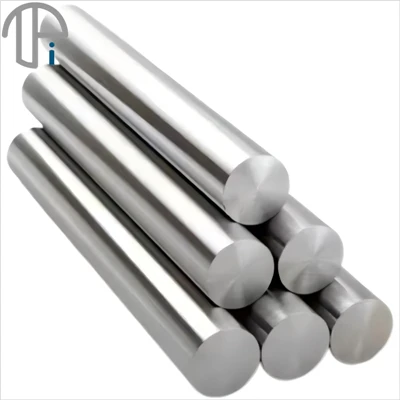
Round Titanium Bar If you’re in the business of organic wastewater treatment and are looking for high – quality titanium anodes, I’d love to talk to you. Whether you’re dealing with low – temperature, moderate – temperature, or high – temperature wastewater, we have the expertise to help you choose the right anode for your needs. Don’t hesitate to reach out and start a conversation about your specific requirements.
References
- Bard, A. J., & Faulkner, L. R. (2001). Electrochemical Methods: Fundamentals and Applications. John Wiley & Sons.
- Parsons, R. (1974). standard potentials in aqueous solution. CRC press.
- Pourbaix, M. (1974). Atlas of electrochemical equilibria in aqueous solutions. National Association of Corrosion Engineers.
Baoji Top Titanium Industry Co., Ltd.
As one of the most professional titanium anodes for organic wastewater treatment manufacturers and suppliers in China, we’re featured by quality products and good price. Please rest assured to buy bulk titanium anodes for organic wastewater treatment in stock here and get quotation from our factory. Customized orders are welcome.
Address: No. 2, South Section Of Phoenix 2nd Road,High-Tech Zone, Baoji,Shaanxi, China (Mainland)
E-mail: sales@bjtopti.com
WebSite: https://www.china-topti.com/
