Hey everyone, if you’ve ever scrolled through packaging forums or talked to folks in the stretch wrap game, you’ve probably seen this question pop up a million times: Can a film blowing machine actually make stretch films? And as a film blowing machine supplier who’s been in this messy, awesome industry for over 12 years, I get why there’s so much confusion here. Let’s cut through the fluff, skip the jargon that makes your eyes glaze over, and get real about how this works—because it’s not a yes/no answer, it’s a “here’s exactly how to make it happen” kind of thing. Film Blowing Machine
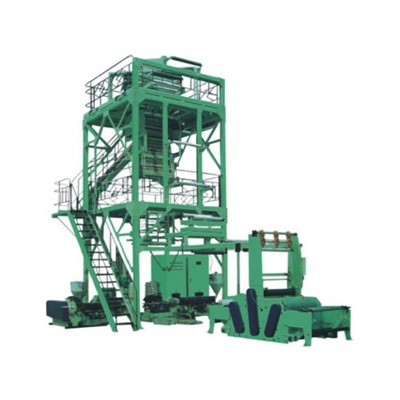
First, let’s clear up what people actually mean when they say “stretch film” vs. regular blown film. Stretch film (sometimes called stretch wrap or pallet wrap) isn’t just any thin plastic roll. It’s got that super stretchy, memory-retentive vibe—pull it tight around a pallet of boxes, and it bounces back just enough to hold everything steady, no slipping, no sagging. Regular blown film, like the stuff you use for trash bags or bread packaging, is thin, but it doesn’t have that critical stretch and cling. That’s the big difference, and that’s where people usually get stuck when they’re wondering if their existing film blowing machine (or a new one they’re looking at) can handle it.
Wait, let’s go back to basics for a sec, in case someone’s totally new to this. A film blowing machine works by melting plastic resin (usually linear low-density polyethylene, aka LLDPE, which is the star here) and forcing it through a circular die. Then you blow air into the molten plastic to inflate it into a big tube, cool it down with air rings, and nip it into a flat roll. That’s the core process, but stretch film needs tweaks to that process that not all people know about.
A lot of folks think, “Oh, I already have a film blowing machine, so I can just switch to stretch film resin and call it a day.” Nah, that’s not how it works. The key to stretch film’s stretch is the resin itself, the machine settings, and the extra hardware you might need. Let’s break that down. First, LLDPE is non-negotiable here—way better for stretch than LDPE (low-density polyethylene, the stuff in grocery bags) because it has longer polymer chains that stretch without breaking. Sometimes people mix in a little metallocene LLDPE (mLLDPE) for extra cling, especially for hand stretch film, but that’s a small add-on. You can’t use regular LDPE for stretch film, plain and simple—it just doesn’t have the tensile strength or the stretch memory.
But even if you’ve got the right resin, your basic film blowing machine might not cut it. Why? Because stretch film needs a much thinner gauge than regular blown film. Like, pallet stretch film is usually 15 to 80 microns thick, whereas a regular trash bag might be 20 to 100, but wait—no, actually, the big difference is the draw ratio. For stretch film, we’re talking about a draw ratio (how much you stretch the film after it comes out of the die) of 3:1 up to 6:1, sometimes even higher for high-performance stretch wrap. That means the film is stretched three to six times its original length after it leaves the die. A standard film blowing machine might only handle a draw ratio of 2:1, max, for regular film. So you need a machine with a longer haul-off unit, something that can pull the film faster without breaking it, and maybe a more precise temperature control system—too hot, and the film is too stretchy; too cold, and it snaps.
Oh, and there’s that thing about “cast film vs. blown film” stretch film, right? Wait, a lot of people mix these up, too. Cast stretch film is made with a cast film line, which is a flat, extruded film, and it’s usually clearer, has more consistent stretch. But blown stretch film—made on a film blowing machine—has its own perks: it’s more puncture-resistant, good for heavy-duty pallets, and the circular production makes it easier to make jumbo rolls without seams. I know some folks swear by cast, but blown stretch film is totally a real thing, and it’s super popular with manufacturers that already have film blowing machines in-house so they don’t have to buy a whole new line.
Let’s talk about the extra gear you might need if you’re retrofitting an existing machine. First, air rings—standard air rings are fine, but a dual-air ring (one for inside the bubble, one for outside) gives more even cooling, which is key for consistent stretch across the whole roll. Then there’s the nip rollers: they need to be smooth and calibrated to pull the film evenly, no snags that cause uneven stretch. Some people add a stretching unit after the nip (called an offline stretcher) to bump up the draw ratio even more—so if your machine maxes out at 4:1, an offline unit can push it to 5:1 or 6:1 for ultra-high-performance stretch film that can hold 5,000-pound pallets.
Wait, let’s address the myths I hear all the time, because they drive me nuts. Myth #1: Film blowing machines can only make thin stretch film. No, we make heavy-duty stretch film for construction materials, metal coils, all kinds of bulky stuff, on our blown lines. Myth #2: Blown stretch film is lower quality than cast. Maybe 15 years ago, but modern resin and machine tech has closed that gap. I’ve got a customer in Ohio that’s been using our film blowing machines to make blown stretch film for food pallets for 8 years now—their product is just as good as any cast line stuff, and they save 20% on production costs by using the same machine they already have for other packaging.
Another big thing: output. If you’re used to running regular blown film, stretch film runs a little slower because of the thinner gauges and tighter control, but it’s worth it. Let’s say you run a 1000mm die on a film blowing machine—you can make 50 to 100 kg of stretch film per hour, depending on gauge. A cast line might run faster, but if you don’t want to buy a whole new line, that extra hour of run time is nothing compared to the cost of a $500k cast line vs. modifying your existing blown line for a fraction of that.
Wait, what about small business owners or folks just getting started? I’ve had a lot of new packaging companies come to me and say, “We don’t want to spend a ton of money on a new line—can we use a small film blowing machine for stretch film?” Absolutely. Our entry-level film blowing machines, the ones that are great for small to medium production runs, can definitely make stretch film. You just adjust the resin blend, tweak the temperature settings (around 180 to 220 degrees Celsius for LLDPE, depending on the grade), and make sure your haul-off can keep up. A lot of small operations use these to make hand stretch film, which is thinner (15 to 30 microns) and perfect for small pallets or moving boxes.
Let’s get into the actual process steps for stretch film on a film blowing machine, just so you can visualize it. First, you load the mLLDPE or LLDPE resin into the hopper, dry it thoroughly—moisture in the resin causes bubbles or weak spots in stretch film, that’s a big no-no. Then the screw melts it, feeds it to the circular die, which is heated evenly all around (no hot spots, that messes up stretch consistency). The air ring cools the molten bubble right as it comes out of the die, so the resin sets into film before it can stretch too much. Then the haul-off rollers pull the film at a constant, fast speed, stretching it to the desired draw ratio. Some lines have an internal bubble cooling (IBC) system, which is a game-changer for stretch film—it cools the bubble from the inside, so the film is more uniform, no weak edges or thin spots. Then the film goes through a collapsing frame, which flattens the tube, and then onto a slitter to cut it into the right width for rolls, then wound onto cores. That’s it—simple, but every step has to be dialed in for stretch film, not regular film.
Now, let’s talk about common mistakes people make, because I’ve seen these too many times. First, using old, dirty resin. If your LLDPE has leftover LDPE from a previous run, it kills the stretch memory. Second, not calibrating the haul-off speed. If it’s too fast, the film breaks; too slow, the gauge is too thick and useless for stretch. Third, skimping on cooling. If the bubble doesn’t cool fast enough, the polymer chains don’t align properly, so the film won’t stretch evenly. Fourth, not testing the film before full production. Always do a small test run, stretch it by hand, check for tears, test how well it clings—don’t just crank the machine speed and make 100 rolls that are garbage.
Here’s the thing: as a film blowing machine supplier, I get asked this question every single week, and the answer is almost always yes—if you’ve got the right resin, the right machine tweaks, and the right settings. A lot of people act like stretch film is only for cast lines, but that’s outdated. Blown stretch film has a ton of advantages, especially for manufacturers that already have film blowing lines. You don’t have to build a whole new production facility; you just adjust a few parts, tweak the settings, and you’re making a product that’s in high demand for shipping, warehousing, logistics, even retail packaging.
If you’re someone who’s thinking about getting into stretch film production, or you’ve got an existing film blowing machine and you want to add stretch film to your lineup, don’t waste time listening to the people who say it’s impossible. It’s totally doable, and it’s one of the most profitable additions you can make to your production. The key is working with a supplier who knows stretch film, not just regular blown film—someone who can help you pick the right resin, adjust your machine settings, maybe add a few small parts (like an IBC system or a better haul-off) without charging you an arm and a leg.
I’ve seen customers go from running just regular trash bags to a full line of stretch film for industrial pallets in 6 months, all using the same film blowing machines they already had. That’s the beauty of it—you don’t have to start over. It’s just a matter of understanding what stretch film needs, and adjusting your process (and your machine) to meet that demand.
If you’re curious about what your current film blowing machine can do, or you want to talk about upgrading to make stretch film, reach out to us anytime. We don’t do generic sales pitches—we’ll sit down with you, walk through your current setup, give you real, honest advice on what tweaks you need, and even help you with test runs to make sure you’re producing high-quality stretch film that sells. Don’t waste time guessing if it’s possible—let’s talk and figure out how to make it work for you.
Bag Making Machine References:
- Modern Plastics Encyclopedia, 2022, Section on Film Extrusion and Stretch Wrap Technology.
- European Plastic Converters Association (EPCA), 2021 Report on Blown Film Applications for Stretch Packaging.
- "Film Extrusion Basics" by John V. Gabara, 3rd Edition, 2019, Chapter 7: Specialized Film Products.
- Global Stretch Film Market Report, 2023, Published by Grand View Research, Inc.
Ruian Huawei Machinery Co., Ltd.
As one of the most professional film blowing machine suppliers in China, we’re featured by quality products and low price. Please rest assured to buy discount film blowing machine made in China here from our factory. Also, quotation is available.
Address: No. 1, Building 2, Jingye Road, Dongshan Street, Rui’an City, Zhejiang Province
E-mail: 13695753569@163.com
WebSite: https://www.hw-machines.com/
